Paestum Guided Tour
The ancient Paestum was founded around 2500 years ago (late 7th century BC), occupying the green Piana del Sele in Magna Graecia. Dedicated to the god of the sea Poseidon, the then Poseidonia was erected by the citizens of Sibari (now Calabria), to make it a port on the Tyrrhenian Sea useful for trade with the Etruscans. In the age of classical Greece (V-IV century BC), the city experienced its period of maximum splendor and wealth, thus forging the face that seduced eighteenth-century travelers with its Greek walls, the large agora and its three large temples. In 273 BC, Rome established a colony of Latin law there and the city became Paestum. Relations between Pestani and Romans are always close and trusted, so much so that the ancient polis beats its own currency and prospered in the economy while absorbing the new Roman urban reorganization.
The History of Poseidonia-Paestum
Located in southern Campania, Paestum Archaeological Park is one of the most extraordinary archaeological sites in Italy and one of the best-preserved examples of an ancient Greek city in the world.
Paestum was founded around the 6th century BC by Greek colonists from the city of Sybaris, who named it Poseidonia in honor of Poseidon, the Greek god of the sea. Thanks to its fertile plains and strategic location near the Tyrrhenian coast, the city quickly became an important commercial and cultural center of Magna Graecia.
During the Greek period, Poseidonia flourished economically and artistically. Magnificent Doric temples were constructed, many of which still survive today in an exceptional state of preservation. The most famous are the Temple of Hera, the Temple of Athena, and the impressive Temple of Neptune, considered one of the finest examples of Greek architecture in the world.
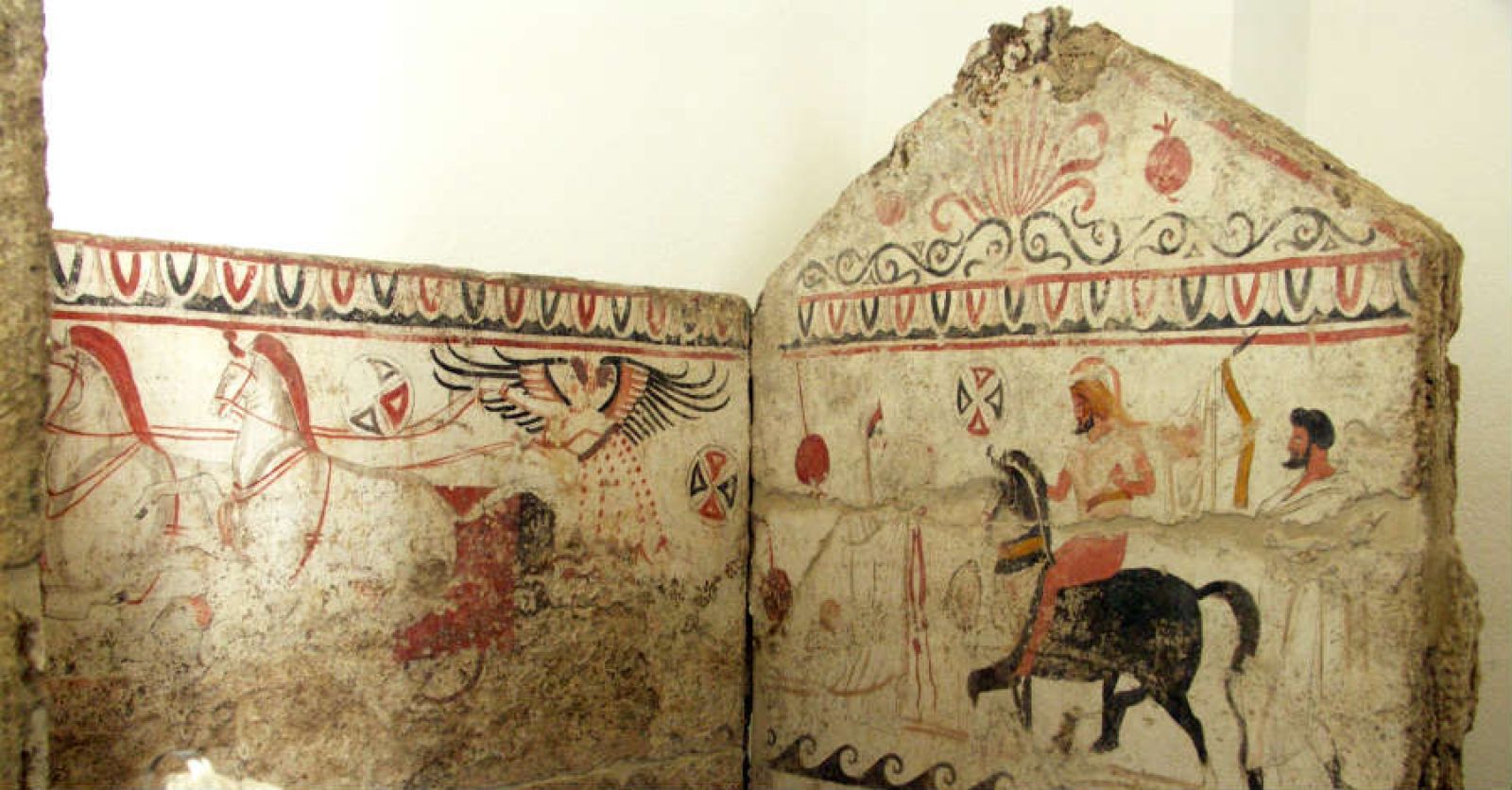
In the 4th century BC the city came under the control of the Lucanians, an Italic population from southern Italy. Although Greek traditions continued to influence the city, new cultural elements and burial customs appeared during this period, as demonstrated by the famous painted tombs discovered in the necropolis surrounding the ancient settlement.
Paestum later became a Roman colony in 273 BC. The Romans renamed the city Paestum and introduced new buildings, roads, forums, baths, and an amphitheater. Despite Romanization, the city maintained strong traces of its Greek origins for centuries.
After the fall of the Roman Empire, Paestum gradually declined due to malaria, the silting of rivers, and repeated invasions. The city was eventually abandoned during the Middle Ages, leaving its temples hidden among forests and marshlands for many centuries.
In the 18th century Paestum was rediscovered during the Bourbon period, attracting artists, architects, and travelers from all over Europe. Its monumental temples deeply influenced Neoclassical architecture and became an important destination of the Grand Tour.
Today Paestum Archaeological Park is recognized as a UNESCO World Heritage Site and remains one of the most fascinating places to discover the history, religion, art, and urban life of the ancient Mediterranean world. Visitors can walk among temples, Roman streets, defensive walls, and museums containing extraordinary archaeological finds, including the famous Tomb of the Diver, one of the most unique masterpieces of ancient Greek painting ever discovered.
Itinerary
We are visiting:
– The Temple of Neptune
– The so-called Basilica: it’s another temple
– The main street
– The Forum
– The Courthouse
– The Arena
– A sacred swimming pool of a temple
– An house of the roman period
– A tomb (Greek period). – The Temple of Ceres
– The Antiquarium: it’s the local Museum with Greek and Lucan art collections.
*This tour can be customized
What’s included
Private Guide
What’s not included
Tour Duration
-The tour lasts approximately 2.5 hours
Meeting location
– The meeting point is the entrance of the Archaeological Site.