As an archaeologist, I excavated a house in Pompeii together with my university professor — an incredible experience that I will always carry with me. For me, Pompeii is simply a magical place that leaves visitors with an unforgettable understanding of how a Roman city was built and organized, including its public, private, civil, and religious aspects.
Pompeii was an ancient Roman city located near modern-day Naples, Italy. Initially, it was a small agricultural community, but over time it developed into a prosperous and bustling city thanks to its strategic location near the Bay of Naples and its fertile volcanic soil.
The catastrophic eruption of Mount Vesuvius in AD 79 buried and sealed the city, allowing for an unparalleled level of preservation in the field of archaeology. One of the greatest natural disasters in history stopped time and left behind an extraordinary testimony of Roman civilization — a people who deeply influenced the course of history and left a remarkable imprint on the ancient world.
The History of Pompeii
Greek Influence
Before becoming a Roman city, Pompeii was influenced by Greek culture, as were many other cities in southern Italy. Greek trading posts contributed significantly to the city’s cultural and economic development.
Roman Conquest
In the 5th century BC, Pompeii came under the control of the Samnites, another Italic population. By the 4th century BC, it became part of the expanding Roman Republic during the Samnite Wars. Under Roman rule, Pompeii flourished as an important commercial and trading center.
Prosperity and Urban Development
During the 1st century BC, Pompeii experienced remarkable growth and prosperity. The city expanded rapidly, and numerous temples, theaters, baths, villas, and public buildings were constructed. Pompeii became a vibrant center of commerce, art, and culture.
The Eruption of Mount Vesuvius
One of the most dramatic events in Pompeii’s history occurred in AD 79, when Mount Vesuvius erupted catastrophically. The city and nearby settlements were buried beneath volcanic ash and pumice, preserving them extraordinarily well for centuries.
Rediscovery
Pompeii remained buried and forgotten until its rediscovery in the 18th century. Excavations began shortly afterward and continue today, revealing invaluable insights into daily life in ancient Rome.
Pompeii Today
Today, Pompeii is one of the world’s most important archaeological sites. Millions of visitors come every year to explore its streets, houses, temples, theaters, and artifacts. Pompeii offers a unique glimpse into the architecture, society, and daily life of ancient Rome.
Pompeii’s history is a story of prosperity, destruction, and rediscovery — a unique window into the ancient world.
This tour includes the last discoveries and Villa of the Mysteries. It is a unique emotion to visit a Roman city that integrates in all its architectural aspects. During the tour I’m talking about the public and private life of the ancient Romans. It will be like travelling back in time!
I can also customize the tour upon request.
Itinerary
During the guided tour of the ancient city you are visiting (the order might change while we walk during this tour):
– The Small Theatre
– The Large Theatre
– A bakery shop
– A laundry
– The House of the Ceii
– Via dell’Abbondanza (the main street)
– Thermopolium of Vetutius Placidus (a street food restaurant)
– The Stabian Baths
– The Lupanar (the main Brothel in Pompeii)
– The Forum (the main square)
– The Building of Eumachia
– The Temple of the Genius of Augustus
– The plastercasts of the victims
– The House of the Faun
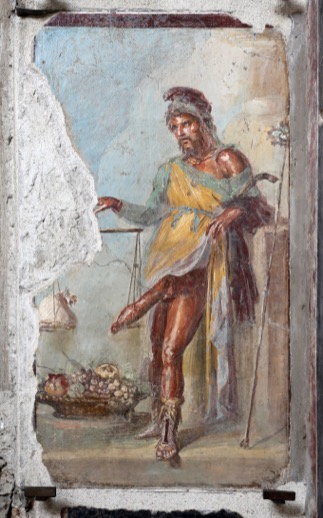
– The House of the Vettii
– The Villa of the Mysteries
What’s included
Private Guide.
What’s not included
At Porta Esedra gate in Pompei, outside the ticket’s office (by the Hotel Vittoria).